Starfleet Intelligence Datafile #297481/K12-V3
Subject: The Vethari Dominion
Overview
| Prince Selnar ir’Vethis (In Exile; Asylum Granted) |
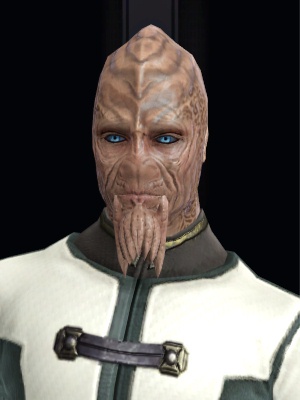 |
| Region: T’Varn Frontier, Mariah Sector, Alpha Quadrant |
| Capital: Irthisa, Vethara Prime |
| Population: ~ 18.6 billion (Prime & colonies) |
Government: Dynastic monarchy;
Dominion Council advisory body |
Military: Royal Vethari Fleet
(approx. 120 active cruisers and <500 support) |
| Status: Independent frontier power |
Relations: Neutral-hostile stance with UFP;
Adversarial history with Breen Confederacy |
The Vethari Dominion is a compact frontier entity whose presence looms large despite its modest size. Their society is rigidly hierarchical, dominated by dynastic monarchy and an entrenched noble class. Above all, the Vethari are fiercely protective of their royal bloodlines. Even minor heirs are treated as matters of state, and any offence against them is pursued with unyielding determination.
The Dominion’s territory lies in the Mariah Sector, a stretch of the Alpha Quadrant westward beyond Breen and Cardassian space. It is disputed ground, where maps blur and law is thin. Patrols are infrequent, yet the Vethari reputation keeps smugglers and raiders in check. They are not feared for the size of their fleets, but for the precision and ruthlessness with which they strike when provoked.
Government & Politics
The Dominion is ruled by the Dynast of Irthisa, a hereditary sovereign whose authority is reinforced by ritual and bloodline. Beneath the throne sits the Dominion Council, a chamber of nobles drawn from the great houses. In theory, the Council advises the Dynast; in practice, it is a theatre of rivalries, where influence is measured in wealth, lineage, and military command.
The noble houses are many, but only a handful hold true power. Each house traces its ancestry to the first unification of Vethara Prime in the 22nd century, and each maintains estates, fleets, or colonies that reflect their standing. Alliances between houses are forged through marriage and broken through betrayal. Intrigue is a constant undercurrent, though cloaked in ceremonial politeness.
Succession is the most perilous matter in Vethari politics. All children of the Dynast are heirs, but none are secure until the Trials of Ascendancy are completed. These trials are part martial contest, part ordeal of statecraft. Heirs are expected to duel before witnesses, command war games, and recite the Dominion’s founding epics from memory. Failure in any aspect is disqualifying… sometimes terminally. It is said that the trials exist not to prove worth, but to whittle down rivals until only one remains.
The early 25th century was a turning point. Following the sudden deaths of three heirs in close succession, the Dominion plunged into a decade of palace purges and house feuds. The eventual rise of the current dynasty was marked by ruthless consolidation. Rival claimants were eliminated, sympathetic houses elevated, and the Dominion Council reshaped into an echo chamber of loyalists. The scars of this consolidation remain; entire bloodlines extinguished, estates seized, fleets reassigned. Yet the dynasty endures, and with it the unyielding emphasis on preserving the royal bloodline at any cost.
Current Affairs: Prince Selnar ir’Vethis
The stability of the Vethari Dominion has recently been shaken by the escape of Prince Selnar ir’Vethis, youngest scion of the ruling dynasty. His shuttle was found damaged in the Mariah Sector, where he sought asylum with Starfleet personnel. Selnar has alleged a conspiracy within the Dominion to eliminate him, a claim consistent with long-standing rumours of intra-dynastic purges during succession disputes.
This development has ignited a complex diplomatic crisis. For the Vethari, any harm to or betrayal by a royal heir is treated as a wound to the Dominion itself. The ruling court has demanded Selnar’s immediate return, framing his flight as both a personal betrayal and a violation of Vethari sovereignty. For the Federation, the asylum request raises uncomfortable questions: whether to uphold the principles of refuge and protection, or to return an unwilling royal to maintain fragile stability on the frontier.
Federation Diplomatic Corps analysts warn that any decision will have lasting repercussions. To shelter Selnar risks permanent hostility with the Dominion, potentially drawing Breen opportunism into the Mariah Sector; risking the enslavement of innocents. To return him may undermine the Federation’s own moral standing, handing the Vethari dynasty a blank cheque to silence future heirs. For now, the matter remains unresolved, with Selnar’s presence a constant reminder that one person’s survival can tip the balance of an entire frontier.
Military Profile
The Royal Vethari Fleet is modest in number but formidable in reputation. Cruisers and heavy escorts form the core of their naval power, supported by smaller patrol craft that enforce Dominion claims in the Mariah Sector. Each vessel is as much a stage for ceremony as it is a machine of war: banners of the ruling house are hung in view of the crew, and officers wear armour-like uniforms edged in the colours of their lineage.
Vethari ships are built like floating citadels, their hulls thick with duranium and ablative plating. Where other frontier powers might seek speed or graceful lines, the Dominion values endurance and intimidation. Cruisers are angular, their prows reinforced for ramming strikes, and their internal bulkheads layered to contain damage and prolong survival. Ornament is not absent however, as banners and sigils adorn hulls, but it is secondary to the impression of strength. To face a Vethari vessel is to feel the weight of armour bearing down, a promise that it will not yield before you do.
Discipline aboard Vethari ships is absolute. Orders are delivered in clipped ritual speech, where even the phrasing of a command carries encoded expectations of honour. Captains are nobles, selected as much for their pedigree as their skill, but their careers are judged in blood and reputation. Defeat is not simply failure; it is disgrace that stains an entire clan.
Martial Prowess
Beyond the fleet, the Vethari cultivate a fierce martial culture. Every citizen is expected to train in basic fighting forms, but those who become warriors are often professionals trained from youth. Their fighting arts emphasise precision, grace, and lethality.
Each noble warrior carries a vetharic, a long, curved blade engraved with family sigils. To lose it is to lose honour. Dueling with vetharics follows strict ritual. Challenges must be spoken formally, witnessed, and concluded with either concession or blood.
In Vethari fighting culture, there are three mainstream fighting forms (though countless others exist):
Form of the Avian: A style focused on sudden, sweeping strikes and rapid footwork, taught to naval boarding parties. Movements are wide and intimidating, designed to overwhelm foes with speed.
Form of the Stone: A defensive discipline perfected by royal guards. Movements are measured, stance low and immovable, turning the body into a shield around the life they defend.
Form of the Veil: An assassin’s art, disavowed in public but quietly maintained by rival houses. It relies on concealment, feints, and precision strikes at vulnerable points. Rumours hold that the current dynasty secured its rule through masters of the Veil.
The Vethari do not fight for conquest so much as for preservation of order and reputation. Every battle, whether a skirmish with raiders or a duel between heirs, is framed as a message to both their people and their rivals. Victory affirms the dynasty’s legitimacy, while defeat is a wound to be hidden or avenged.
Culture & Customs
The Vethari are humanoid, recognisable by their tanned ochre skin and cranial ridges, though variation exists. They are a proud people, their culture steeped in ritual and layered speech where meaning is rarely direct. Status is displayed through craftsmanship: armour engraved with family sigils, clothing embroidered with clan motifs, weapons wrought as much for display as for battle.
Their society admires subtlety and guile as much as strength. Deceit, if carried out elegantly, is not condemned but celebrated. Court life is a theatre of veiled threats, long silences, and deliberate ceremony, all serving to remind outsiders of the dynasty’s absolute authority.
Most Vethari citizens live lives shaped by ceremony and hierarchy, even far from the gilded halls of Irthisa. Towns and cities on Vethara Prime are ordered in concentric districts, with noble villas at the centre and labouring households spreading outward. An ordinary citizen might work long hours in agriculture, mining, or shipyard service, yet every task is framed within ritual. Harvests are begun with a blessing from the local house-banner, and even loading cargo is often accompanied by short chants that bind work to duty and honour. Children are taught early to recite the names of their ruling dynasty and to know which gestures of deference are expected when an officer or noble passes by.
Day-to-day life is not harsh so much as constrained. Social mobility is rare, but pride is found in service well performed, whether in the Dominion’s fleet, in maintaining the fortified colonies, or in supporting the clan networks that bind families together. Homes are built with layered fabrics and polished metalwork, reflecting the Dominion’s love of ornate design even in modest quarters. Gossip about court intrigue drifts freely through marketplaces, but it is spoken in lowered tones, never voiced as direct criticism. For the ordinary Vethari, survival and dignity lie in navigating tradition with care, offering loyalty upward while finding quiet solidarity among peers.
Interaction Notes
- Diplomatic exchanges with the Vethari demand patience and careful reading of nuance. What is left unsaid often matters more than what is spoken.
- Starfleet captains should not underestimate their military. Small in number, their cruisers are nevertheless formidable, and their precision strikes are calculated to send messages beyond the battlefield.
- Any incident involving a Vethari royal should be treated as a matter of utmost gravity. The Dominion does not forgive transgressions against its lineage, and will pursue vengeance through political or military means.
- Encounters involving Prince Selnar ir’Vethis are considered highly sensitive. Any discussion of his asylum claim may be treated by Vethari officials as direct interference in their internal succession.
- Starfleet officers should be prepared for veiled threats or ritualised condemnations when the subject arises. Even minor remarks can be elevated into matters of honour.
Historical Notes
- The Vethari unified under a single dynasty in the 22nd century.
- Skirmishes with Breen raiders in the 23rd century established their reputation for rapid retaliation.
- First official contact with Federation surveyors came in the mid-24th century, though relations have remained limited.
- During the Dominion War, the Vethari declared neutrality, yet intelligence reports suggest covert weapons sales and mercenary deployments.
- In the early 25th century, the dynasty underwent a brutal succession crisis, consolidating power in the current ruling line.
- In 2424 Prince Selnar ir’Vethis escapes the Dominion and seeks asylum with Federation crews in the Mariah Sector, alleging a plot to kill him. A diplomatic crisis ensues: the Dominion demands his return, while Federation representatives weigh the legal and ethical implications of granting asylum.
